For more than 30 years, DHL’s parcel centers in Germany have relied on Caljan telescopic conveyors to support daily operations and growing parcel volumes. When the 33 centers of Deutsche Post – later part of the DHL Group – went into operation in the early 1990s, 1,575 Caljan telescopes were installed across the network, and many of those systems are still in service today.
That long-term reliability became the starting point for DHL’s next modernization step: introducing a new unloading line focused on improving robustness, creating more operational space, reducing cleaning effort, and supporting safer, more ergonomic working conditions.
A partnership built on experience and close collaboration
Modernizing a parcel center unloading line involves much more than replacing equipment. Operational teams, engineers, and technology partners all need to work closely together to make improvements work daily.
For DHL, the long-standing cooperation with Caljan has played an important role throughout the process.
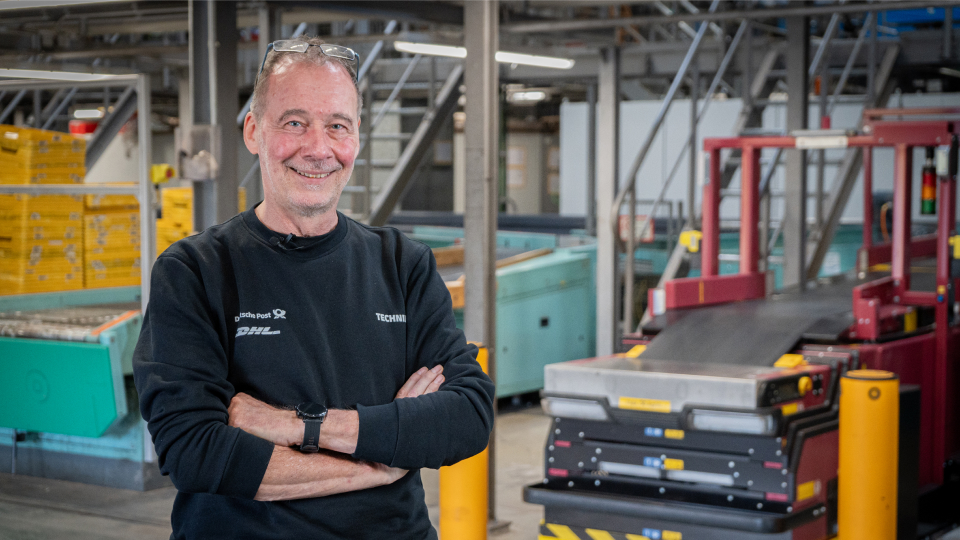
“The cooperation has always worked very well over the years. There was a direct exchange. Solutions were sought and found together. The most important thing was that we could always come together quickly – even if it was only at the computer to make a small improvement right away,” highlights Jörn Stuhlmann, Head of Technology at DHL’s parcel center in Staufenberg.
Modernizing the unloading line
As part of its parcel center modernization project in Germany, DHL worked together with Caljan and Körber Supply Chain Parcel Logistic to introduce a new unloading line designed around their current operational needs.
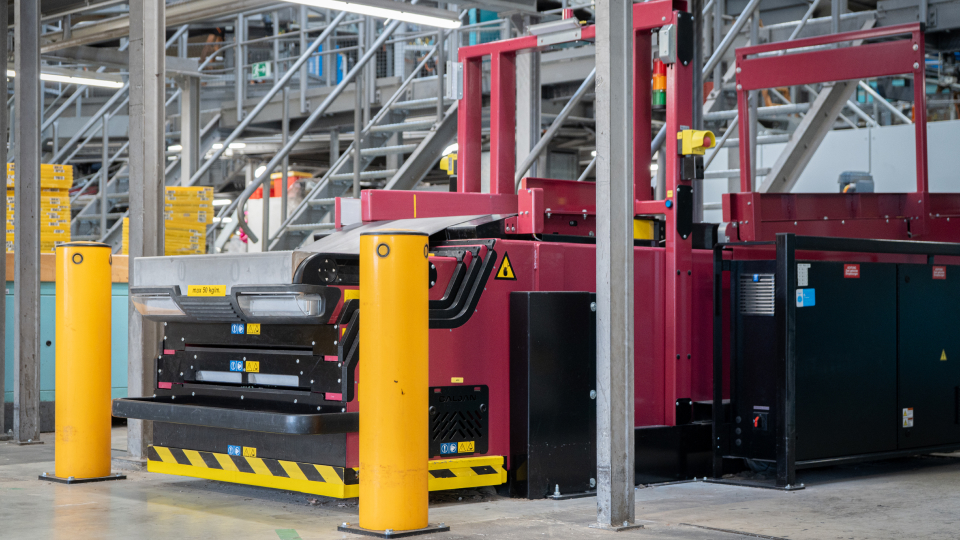
“One of the most important improvements is robustness. The new system is stationary, while the older systems could move sideways on rails. The new setup is also more compact and narrower. This creates more operational space for material supply around the unloading area,” says Markus Mumm, Project Engineer and Technical Project Lead at Deutsche Post DHL.
The space-saving effect goes further. Areas that were previously required for parking machines are no longer needed, freeing up additional space for future operational use or additional installations.
Belt conveyor technology for smoother sorter infeed handling
Another key change in DHL’s new NEL 2.0 unloading line is the transition from roller conveyors to belt conveyor technology on the fixed conveying line in front of the sorter infeed.
According to Markus Mumm, this brings clear operational benefits:
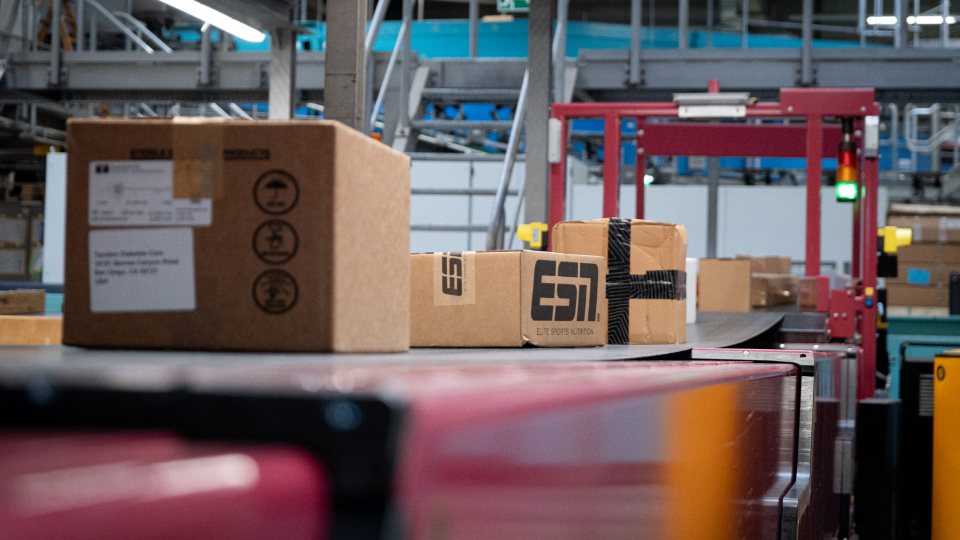
“It requires much less cleaning effort. Less dirt falls into the machine, and shipments are transported more smoothly. This is especially relevant for light, flat, and thin shipments, helping improve measurement accuracy and transport precision along the line.”
Improving identification and handling of non-machinable shipments
Efficient parcel handling also depends on helping operators quickly identify shipments that are unsuitable for automated processing. To ease this process, placement instructions were engraved directly onto the placing table, helping employees distinguish machinable and non-machineable shipments more easily.
The unloading line also includes a No-Go Bar with integrated sensors that detect shipments that are too long, too high, or too wide for the system.
“With the help of a spotlight, the non-machineable shipment is highlighted and can then be removed at a specially designed ergonomic removal point,” explains Markus Mumm.
Together, these features make unloading safer and help operators react more quickly when irregular shipments appear in the flow.
Better ergonomics and working conditions
Safety and ergonomics are also central to the modernization project, especially when working in changing temperatures. Research in European logistics operations shows a clear trend: productivity drops as temperatures move too far above or below 18°C. Prolonged exposure to these conditions can also exacerbate musculoskeletal disorders, which are among the leading causes of disability in the sector.
“Operator wellbeing is important to us, so, as part of the project, we also installed a heating and ventilation system. This makes it possible to cool the swap body or trailer in summer, circulate air inside, or heat the swap body in winter,” explains Markus Mumm.
Additional sensors were also installed to help prevent collisions when gates are not fully opened, further improving workplace safety.
Innovation through close collaboration
For Caljan, the close cooperation with DHL has also helped drive further product development and practical improvements based on real operational challenges.
Jan Sölling-Jörgensen, Strategic Account Manager at Caljan, says: “With the new Caljan telescopes, it was important for us to ensure and achieve the highest safety and ergonomic standards. Furthermore, having the latest state of logistics technology and controls also gives us the advantage of being able to perform better fault diagnostics, so this collaboration helps us generate even more advantages for our clients in the long run.”
Key takeaways from the modernization project
For companies dealing with limited space, growing volumes, maintenance challenges, or demanding working conditions, the DHL project shows how modernization can go beyond increasing throughput alone.
The project also highlights the importance of close cooperation between operators and technology partners when developing solutions for real day-to-day logistics environments.
To learn more about modernizing parcel handling operations, reach out to our team to discuss your challenges and explore possible solutions together.


